Learn Tibetan,
beautifully.
Warm, clear guides paired with modern apps — preserving and promoting the Tibetan language and its literature for complete beginners, dharma students, and travelers to the Himalaya. Start with the script, build real words, and carry a phrasebook in your pocket.
Featured books
The apps
A comprehensive bilingual Tibetan–English dictionary.
Master all 30 Tibetan consonants, letter by letter.

All 63 U.S. National Parks in your pocket.
Latest lessons

Learning Tibetan: common questions
How do I start learning the Tibetan alphabet?
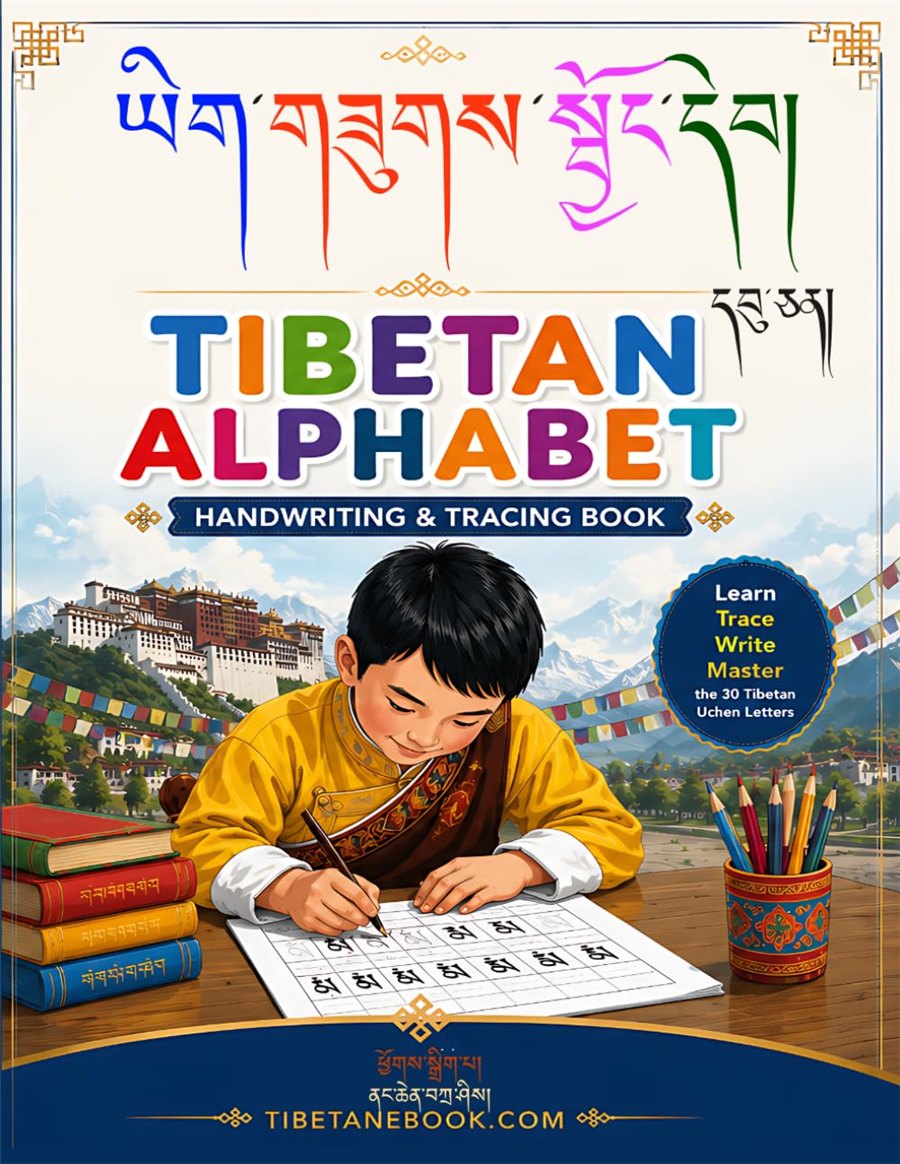
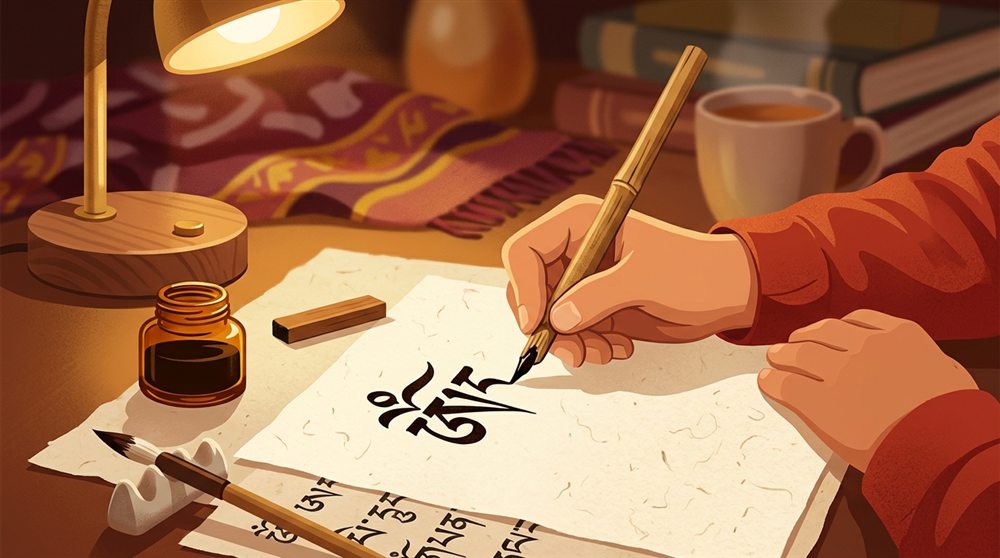
Begin with the 30 consonants and 4 vowel signs of the Uchen script. The free Tibetan Alphabet Learning app teaches each letter with native-speaker audio, and the Tibetan Alphabet Handwriting & Tracing Book walks you through each letter in its correct stroke order until the shapes become muscle memory.
What is the difference between Uchen and Umé script?
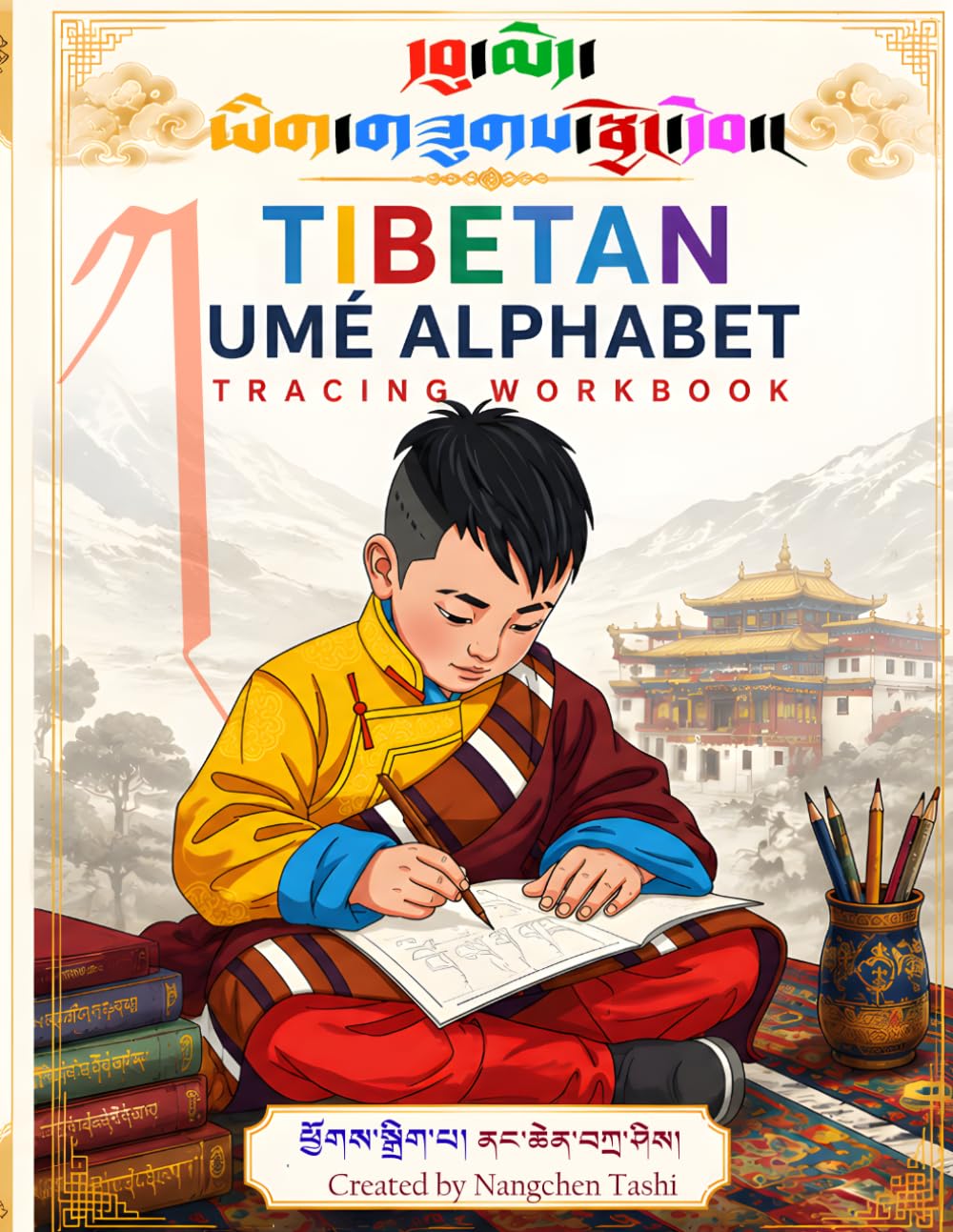
Uchen (dbu-can, “with a head”) is the upright, formal script used in printed books and prayer flags. Umé (dbu-med, “headless”) is the flowing cursive used for everyday handwriting. Learn Uchen first, then the Umé Tracing Workbook teaches the cursive form.
How many letters are in the Tibetan alphabet?
30 consonants, each carrying an inherent “a” sound, plus 4 vowel signs — gi-gu (i), zhabs-kyu (u), ’greng-bu (e) and na-ro (o). 34 core marks in all.
Are the Study Tibetan apps free?
Yes. The Tibetan English Dictionary, Tibetan Alphabet Learning and Sixty-Three: National Parks apps by Nangchen T Studio are free on the App Store and Google Play (the alphabet app is currently iOS only).
Which books are best for a complete beginner?
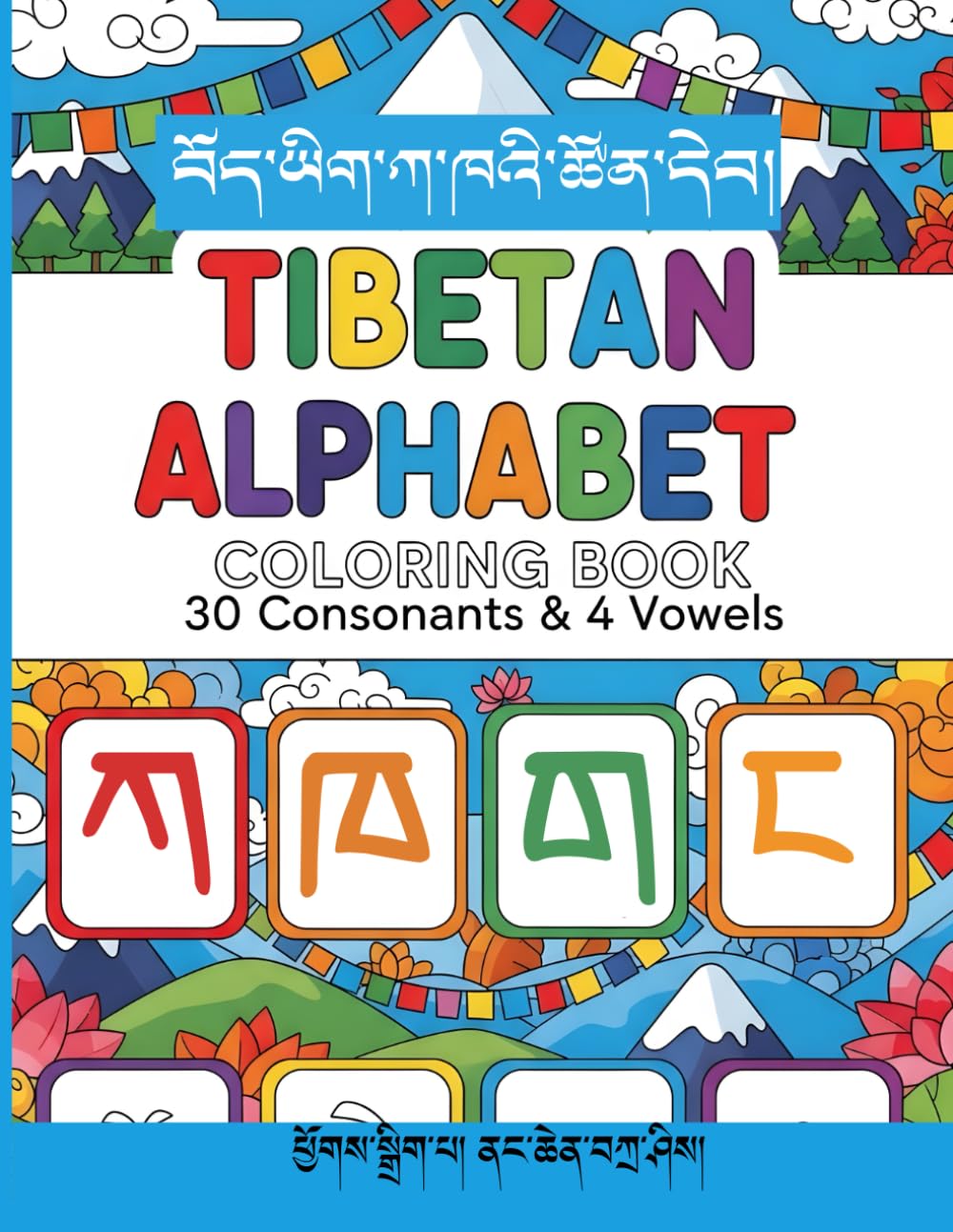
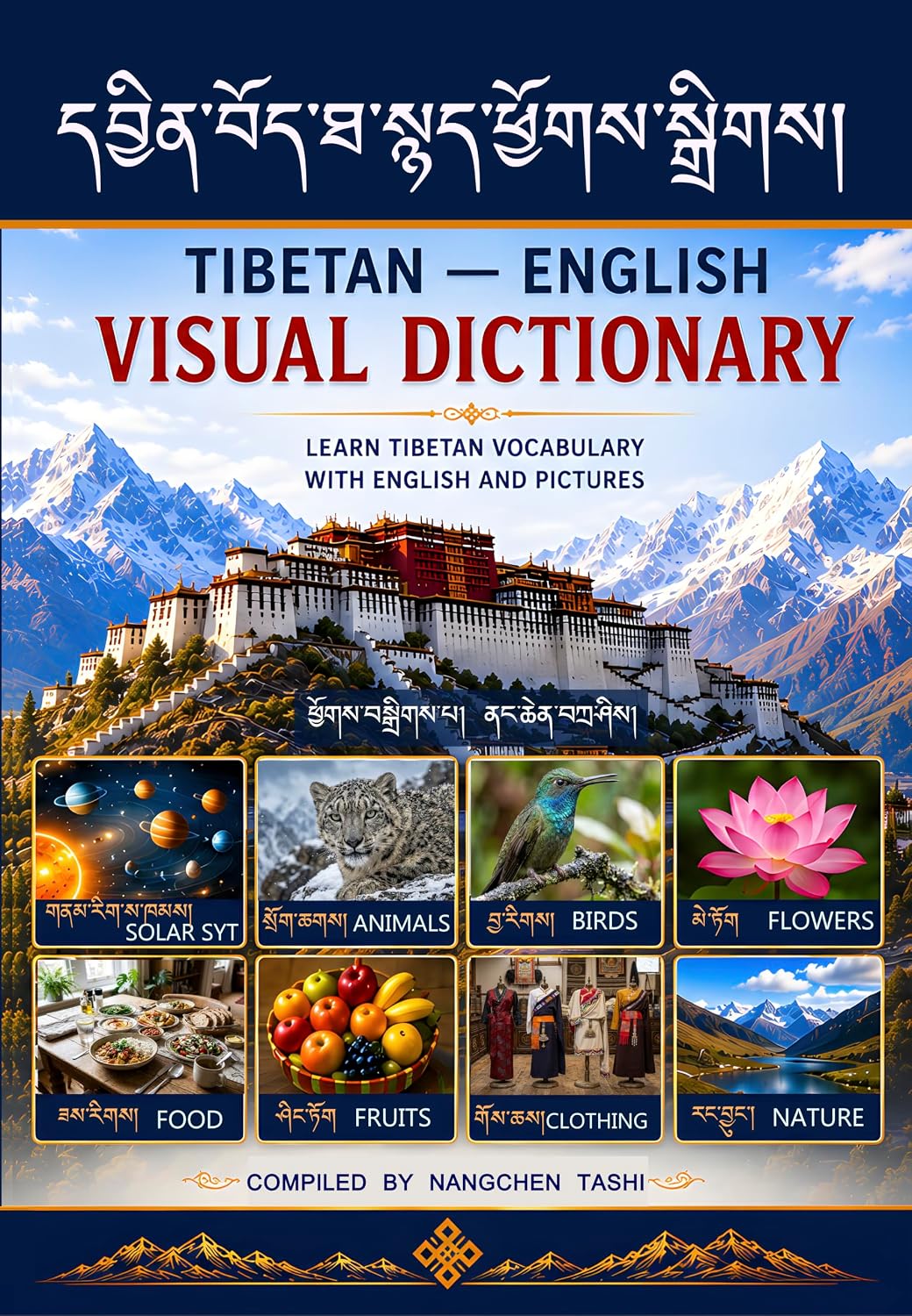
Start with the Handwriting & Tracing Book to read and write the script, add the Tibetan–English Visual Dictionary to build vocabulary through pictures, and for children the Coloring Book (ages 5–10) makes the letters playful.
Who writes the Study Tibetan books and apps?
The books are written by Tashi Nangchen, a Tibetan language educator, and the apps are made by Nangchen T Studio — a studio dedicated to preserving Tibetan and putting the language within everyone’s reach.